What Is a Microneedling Facial? Your Guide to Collagen Induction Therapy

When you start looking into skin rejuvenation treatments that deliver real, lasting change rather than a temporary surface-level fix, one treatment comes up again and again. Microneedling, also known as collagen induction therapy, has earned its reputation as one of the most effective aesthetic treatments available today for a reason. It works with your skin's own biology to rebuild itself from the inside out.
But what is a microneedling facial, exactly? How does it actually improve your skin, and is it really worth the investment?
This guide covers the science behind microneedling, what the treatment experience feels like, what it can treat, and how to decide if it belongs in your skincare strategy.
What Is a Microneedling Facial?
A microneedling facial is a minimally invasive skin rejuvenation treatment that uses a device equipped with fine, sterile needles to create thousands of tiny, controlled micro-injuries on the surface of your skin. That might sound counterintuitive, but those micro-injuries are the entire point.
The treatment is formally known as collagen induction therapy, and that name tells you exactly what it does. By creating precise, microscopic channels in the skin, microneedling triggers your body's natural wound healing response, which floods the treated area with growth factors and stimulates the production of new collagen and elastin.
Unlike laser treatments that use heat energy or chemical peels that dissolve the outer skin layer, microneedling works mechanically. The needles physically create the stimulus your skin needs to begin its regeneration process. This makes it effective across a wider range of skin tones and types, since it doesn't carry the same risk of hyperpigmentation that some heat-based treatments do.
The devices used in a professional medical spa setting are significantly more advanced than the derma rollers you may have seen marketed for home use. Professional-grade devices like the SkinPen use adjustable needle depths that your provider calibrates based on the specific area being treated and the concern being addressed. This level of precision is what separates a clinical microneedling facial from anything you could replicate at home.
It's also worth noting that microneedling pairs exceptionally well with other treatments. Combining microneedling with PRP (platelet-rich plasma) is one of the most popular enhancement options, using your own blood's growth factors to amplify the collagen-building response even further.
How Microneedling Works: The Science of Collagen Induction Therapy
Understanding why microneedling is so effective starts with understanding how your skin heals.
Your skin is designed to repair itself when it's injured. That repair process involves three distinct phases, and microneedling leverages all three of them in a controlled, strategic way.
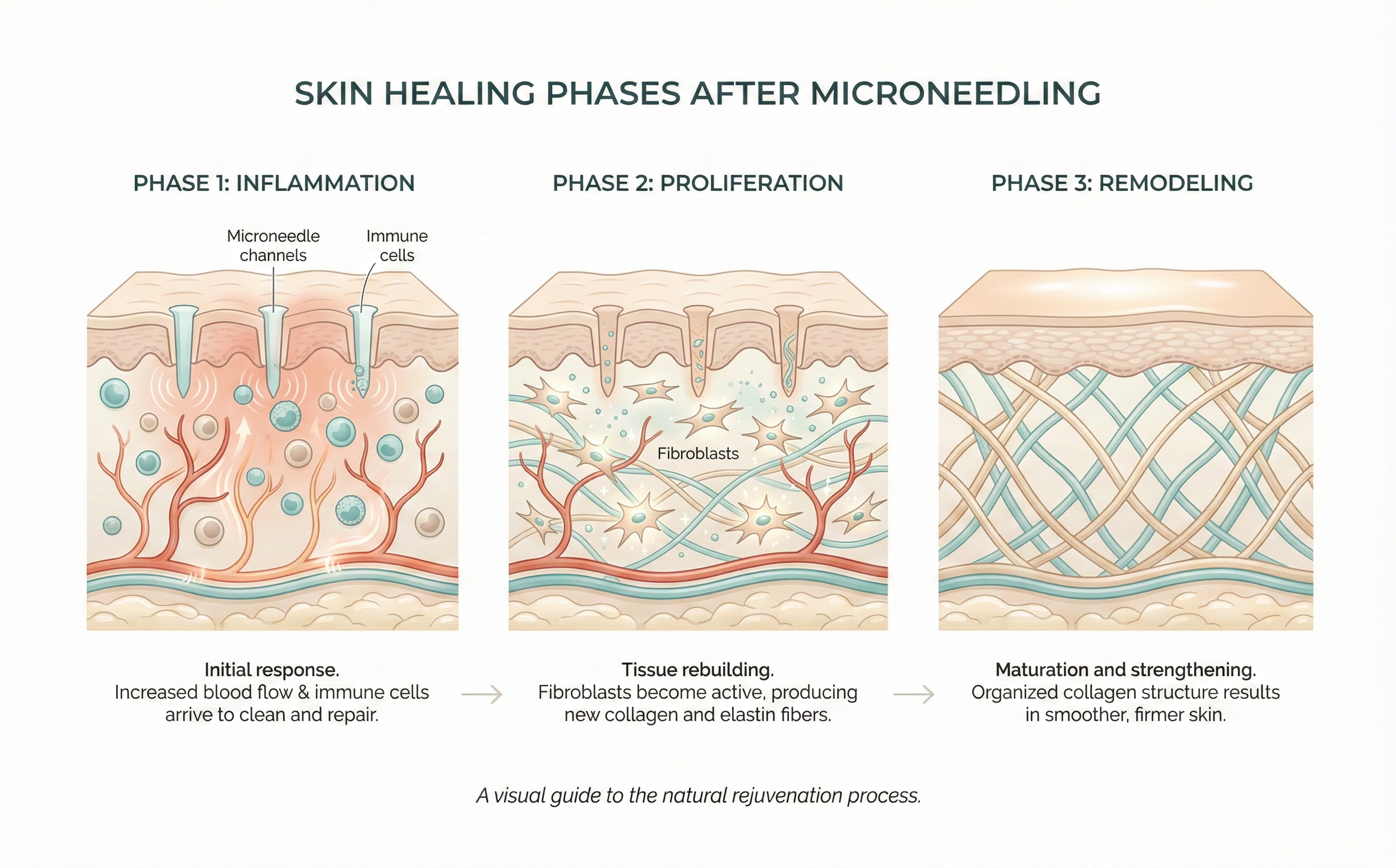
The first phase is the inflammatory response. When those fine needles create micro-channels in your skin, your body immediately recognizes the disruption and sends blood flow and immune cells to the area. This is why your skin looks flushed right after treatment. Your body is already beginning its repair work.
The second phase is proliferation. Over the following days, your skin begins producing new granulation cells and your fibroblasts activate to start building fresh collagen and elastin. The micro-channels also begin closing, and new blood vessels form to support the rebuilding tissue. This is where the real transformation happens beneath the surface.
The third phase is remodeling. Over the weeks and months that follow, the newly produced collagen matures and organizes into a stronger, more structured framework. Your skin becomes firmer, smoother, and more resilient as this remodeling continues.
What makes collagen induction therapy so powerful is that the micro-injuries are small enough that they heal quickly with minimal downtime, but significant enough to trigger a robust regenerative response. Your skin essentially receives the signal to rebuild without sustaining any real damage.
The adjustable needle depth is a critical component of this process. Shallower depths target surface-level concerns like fine lines and texture, while deeper settings address scarring, larger pores, and more significant structural issues. Your provider tailors the depth to your specific needs during each session.
What Does Microneedling Treat?
One of the reasons microneedling has become so popular across medical spa treatments is its versatility. Because it works by stimulating your skin's own repair mechanisms rather than targeting one specific issue with a single mechanism of action, the [range of concerns it can address](link: Microneedling Benefits: What Can It Treat?) is impressively broad.
Fine lines and wrinkles are among the most common reasons people seek microneedling. As new collagen fills in beneath thinning skin, those lines soften and the overall texture becomes smoother and more even.
Acne scarring is another area where microneedling excels. The collagen remodeling process helps break down old scar tissue and replace it with healthier, more evenly structured skin. Rolling and boxcar acne scars tend to respond particularly well to a series of treatments.
Beyond lines and scars, microneedling effectively improves uneven skin tone and hyperpigmentation, enlarged pores, sun damage, overall skin texture and firmness, and stretch marks. It also enhances the absorption and effectiveness of topical skincare products, since the micro-channels allow active ingredients to penetrate far deeper than they would on intact skin.
What to Expect During a Microneedling Session
Knowing what the appointment actually looks like helps you feel prepared and relaxed walking in.
Your session starts with a thorough cleansing of the treatment area to remove all makeup, oil, and debris. Your provider then applies a topical numbing cream, which typically sits on the skin for 20 to 30 minutes before the treatment begins. This step ensures your comfort throughout the procedure, and most patients find the experience very manageable once the numbing has taken effect.
Once your skin is prepped, your provider selects the appropriate needle depth for each area of your face based on your specific concerns and skin condition. The microneedling device is then moved across the skin in a systematic pattern, creating even, consistent micro-channels throughout the treatment area. You may feel a light vibrating or scratching sensation, but the numbing cream keeps discomfort minimal for the vast majority of patients.
The active treatment portion typically takes 15 to 30 minutes depending on the size of the area being treated. Your provider may apply a hydrating serum or growth factor solution during or immediately after the procedure to take advantage of the enhanced absorption while the micro-channels are still open.
Immediately following treatment, your skin will look noticeably red and flushed, similar to a moderate sunburn. This is completely normal and is actually a sign that the inflammatory healing response has been successfully activated. Your provider will apply a calming serum or moisturizer and review your aftercare instructions before you leave.
Most sessions from arrival to departure take about 60 to 90 minutes, with the majority of that time dedicated to numbing rather than the treatment itself.
Does Microneedling Hurt?
This is one of the most frequently asked questions, and the honest answer is that most patients are pleasantly surprised by how comfortable the experience is.
The topical numbing cream applied before treatment does the heavy lifting here. Once it has taken full effect, the sensation during microneedling is typically described as light pressure with a mild scratching or vibrating feeling. Some areas of the face are more sensitive than others, particularly around the forehead and along the nose, but the discomfort is brief and very tolerable.
On a scale of 1 to 10, most patients rate their experience somewhere between a 2 and a 4. If you've had other cosmetic treatments like injectables, you'll likely find microneedling to be comparable or even more comfortable.
Recovery, Aftercare, and Results Timeline
One of microneedling's biggest advantages is its relatively short recovery window compared to more aggressive skin resurfacing treatments.
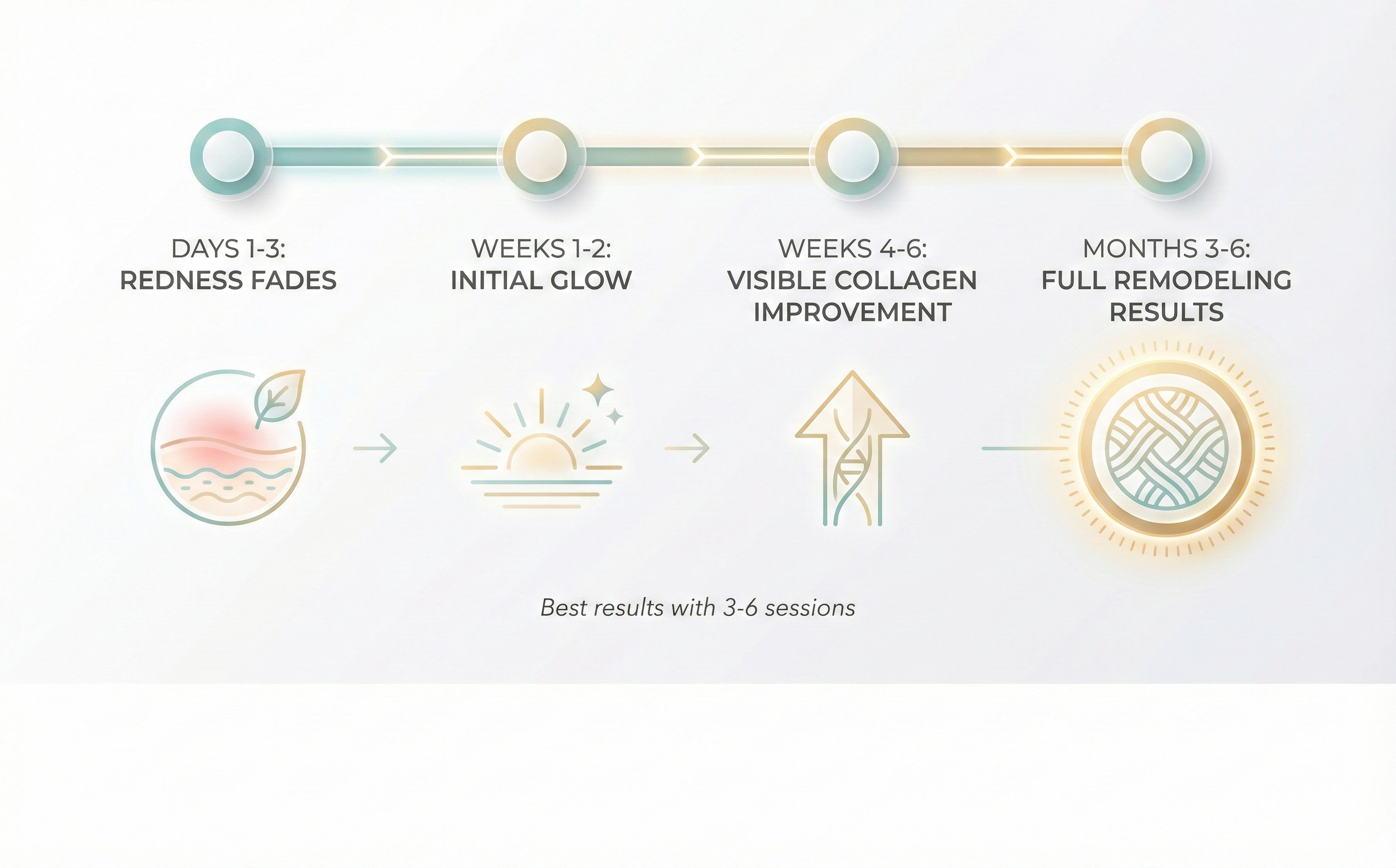
For the first 24 to 48 hours after treatment, your skin will be red and may feel warm, tight, or slightly sensitive. Think of it as a sunburn that fades quickly. Most patients find the redness subsides significantly by day 2 or 3, and many feel comfortable returning to their normal routine within a day.
Proper aftercare during this initial healing window is essential. Your provider will advise you to avoid direct sun exposure, skip active skincare ingredients like retinols and acids for several days, and keep your skin hydrated with gentle, approved products. Following these instructions closely protects your results and ensures your skin heals optimally.
Is Microneedling Worth It?
This is the question that ultimately matters, and the answer for most patients is a clear yes.
Microneedling delivers measurable improvement across a wide range of skin concerns with minimal downtime, a strong safety profile across virtually all skin tones, and results that are built from your own collagen rather than a temporary external product. The treatment is versatile enough to address everything from early fine lines in your 30s to deeper scarring and sun damage in your 50s and beyond.
The investment is also reasonable compared to laser treatments and other resurfacing options, particularly when you factor in the cumulative, long-lasting nature of the collagen remodeling process. Each session continues working beneath the surface for months, meaning the value extends well beyond the appointment itself.
For anyone looking for a proven, science-backed approach to healthier, more resilient skin that improves progressively over time, microneedling consistently delivers.
Start With Your Skin's Natural Potential
Microneedling works because it trusts your body to do what it already knows how to do: heal, rebuild, and regenerate. The treatment simply provides the right signal at the right depth to unlock that process in a controlled, strategic way.
If you're curious about whether microneedling is the right fit for your skin concerns and goals, schedule a consultation with our team. We'll assess your skin, recommend a personalized treatment plan, and make sure you know exactly what to expect every step of the way.