What Is a Chemical Peel Facial? Your Guide to Skin Resurfacing Solutions

There's a reason chemical peels have remained one of the most trusted skin rejuvenation treatments in aesthetic medicine for decades. While newer treatments come and go, peels continue to deliver consistent, measurable results for a wide range of skin concerns.
The concept is straightforward. A professional-grade solution is applied to the skin, it removes damaged outer layers, and your body replaces them with fresher, healthier tissue. But the science behind that process and the range of results it can produce are far more sophisticated than most people realize.
Whether you're exploring aesthetic treatments for the first time or comparing your options for targeted skin correction, this guide covers what a chemical peel facial actually involves, how the resurfacing process works, what it treats, and what to expect from recovery and cost.
What Is a Chemical Peel Facial?
A chemical peel facial is a professional skin resurfacing treatment in which a specially formulated acid solution is applied to the face to remove damaged, dull, or uneven outer layers of skin. As those layers shed, they're replaced by new skin cells that are smoother, more evenly toned, and visibly healthier.
Chemical peels have been used in dermatology and aesthetic medicine for over a century, making them one of the most studied and well-understood skin treatments available. Modern formulations have refined the process significantly, giving providers precise control over the depth of treatment, the specific acids used, and the intensity of the results.
The acids used in chemical peels work by breaking the bonds between dead and damaged skin cells, allowing them to release from the surface in a controlled way. Depending on the type and strength of the peel, this process can target just the outermost layer of skin or penetrate deeper into the dermis where more significant structural changes happen.
What separates a professional chemical peel from an over-the-counter product isn't just the strength of the acid. It's the clinical expertise behind the application. Your provider evaluates your skin type, your specific concerns, and your tolerance to determine the right formulation and the appropriate depth. That level of customization is what makes professional peels so much more effective and predictable than anything you can buy off a shelf.
Chemical peels are also highly versatile. They can be used as a standalone treatment for targeted correction or integrated into a broader skincare strategy alongside other treatments to accelerate and enhance your overall results.
How Chemical Peels Resurface Your Skin
The resurfacing process behind a chemical peel is a carefully controlled form of exfoliation that goes far beyond what any scrub or at-home product can achieve. Understanding how it works explains why the results are so much more dramatic and lasting.
When the acid solution is applied to your skin, it begins dissolving the intercellular bonds that hold dead and damaged skin cells together on the surface. This allows those compromised layers to detach and eventually shed, taking with them accumulated sun damage, uneven pigmentation, rough texture, and other visible imperfections.
But the real value of a chemical peel isn't just in what it removes. It's in what it triggers underneath.
As your body recognizes that the outer skin barrier has been disrupted, it initiates a wound healing response similar to what happens with other resurfacing treatments. Fibroblasts activate and begin producing fresh collagen and elastin. New skin cells generate more rapidly. Blood flow to the area increases, delivering nutrients and growth factors that support the rebuilding process.
The result is skin that isn't just "less damaged" on the surface. It's structurally renewed from within, with a stronger collagen foundation, improved elasticity, and a more even distribution of melanin.
The depth of this process depends entirely on the type of peel used. A lighter peel addresses surface-level concerns by removing only the outermost epidermal layer. A medium-depth peel penetrates further, reaching the upper dermis where deeper pigmentation issues and more significant textural irregularities live. The deeper the peel reaches, the more dramatic the regenerative response and the more pronounced the results.
This is why chemical peels are considered one of the best skin resurfacing treatments available. They don't just improve appearance temporarily. They trigger a biological renewal process that produces genuinely new, healthier skin.
Types of Chemical Peels: Finding the Right Depth
Not all chemical peels are created equal, and choosing the right type is one of the most important factors in getting results that match your goals. Peels are categorized by how deeply they penetrate the skin, and each depth serves a different purpose.
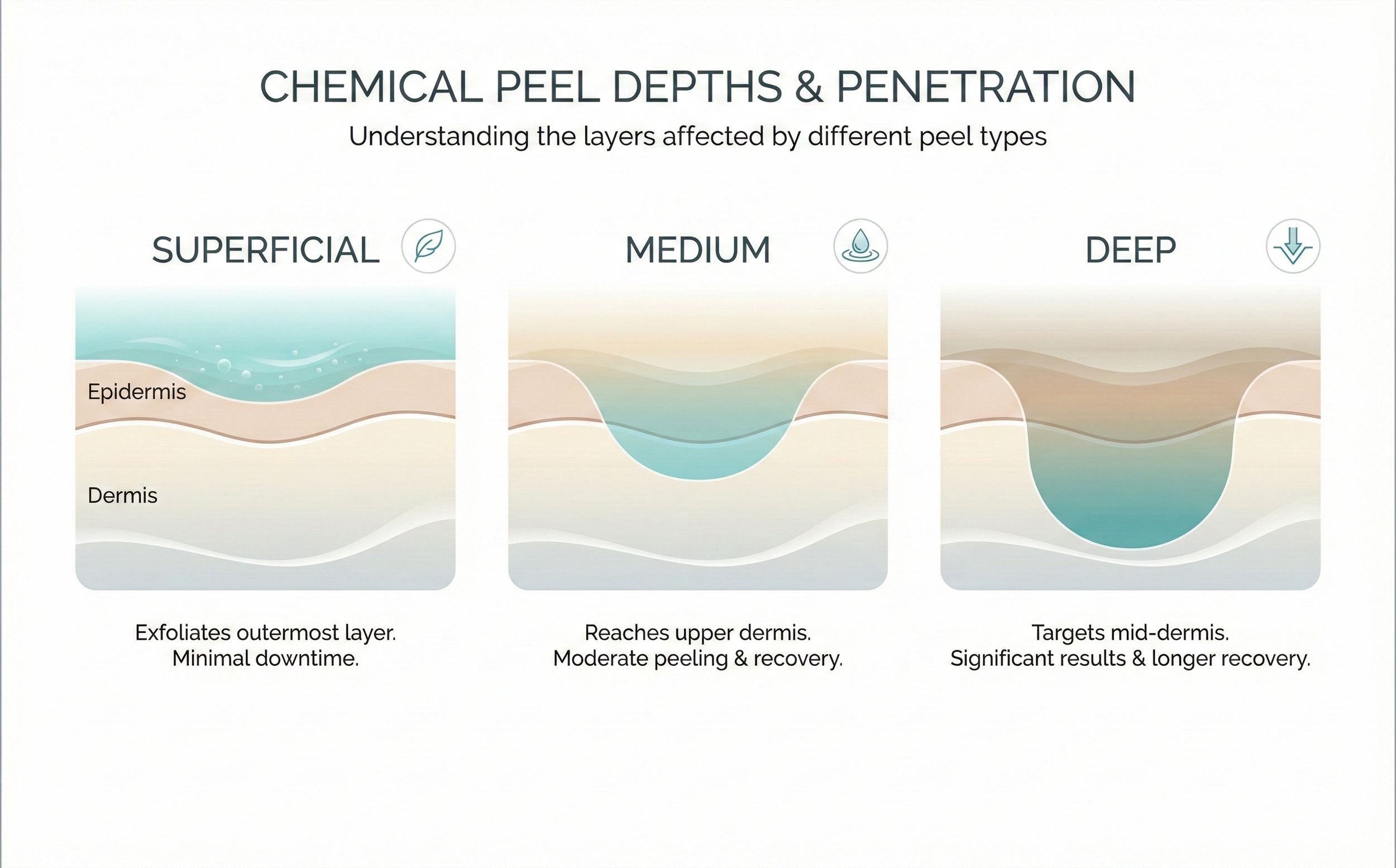
Superficial and medium-depth peels are the two most commonly performed in medical spa settings.
Superficial peels, sometimes called lunchtime peels, use milder acids like glycolic, lactic, or mandelic acid to exfoliate only the outermost layer of skin. They're ideal for general maintenance, mild texture improvement, dullness, and early signs of sun damage. Downtime is minimal, and most people return to their normal routine the same day.
Medium-depth peels use stronger acids like trichloroacetic acid (TCA) to penetrate into the upper dermis. These are better suited for moderate sun damage, deeper pigmentation issues, fine lines, and more noticeable textural concerns. They involve more recovery time but produce significantly more visible results.
Deep peels penetrate further into the mid-dermis and deliver the most dramatic transformation. However, they require substantial downtime and are less commonly performed in medical spa settings due to the intensity of the recovery process.
Your provider will recommend the appropriate depth based on your skin type, your concerns, and how much downtime you can accommodate. In many cases, a series of lighter peels can achieve cumulative results that rival a single deeper treatment with far less recovery.
What Can Chemical Peels Treat?
Chemical peels address a broad spectrum of skin concerns, which is part of what makes them such a valuable tool in aesthetic skincare.
Hyperpigmentation and dark spots are among the most common reasons patients seek chemical peels. Sun damage, melasma, and post-inflammatory discoloration all respond well to the controlled exfoliation and melanin redistribution that peels provide.
Active breakouts and post-acne discoloration are another area where peels excel. Certain acid formulations help unclog pores, reduce bacteria, and fade the dark marks left behind after blemishes heal.
Fine lines, rough texture, enlarged pores, and overall dullness all improve as damaged surface layers are removed and replaced with fresher, healthier cells. For patients dealing with early signs of aging or cumulative sun exposure, peels offer one of the most efficient paths to visibly brighter, smoother skin.
If you're weighing your options between peels and other resurfacing methods, it's worth understanding how they compare to treatments like microneedling, which uses a completely different mechanism to achieve collagen stimulation. Both are effective, but they work in distinct ways and may be better suited to different concerns.
What to Expect During a Chemical Peel Session
A chemical peel appointment is more straightforward than most people expect, and knowing the steps in advance helps you feel comfortable and prepared.
Your session begins with a thorough cleansing to remove all makeup, oil, and residue from the skin's surface. Your provider needs a completely clean canvas to ensure the peel solution makes even, consistent contact with the skin. Depending on the type of peel, a degreasing agent may also be applied to further prepare the surface.
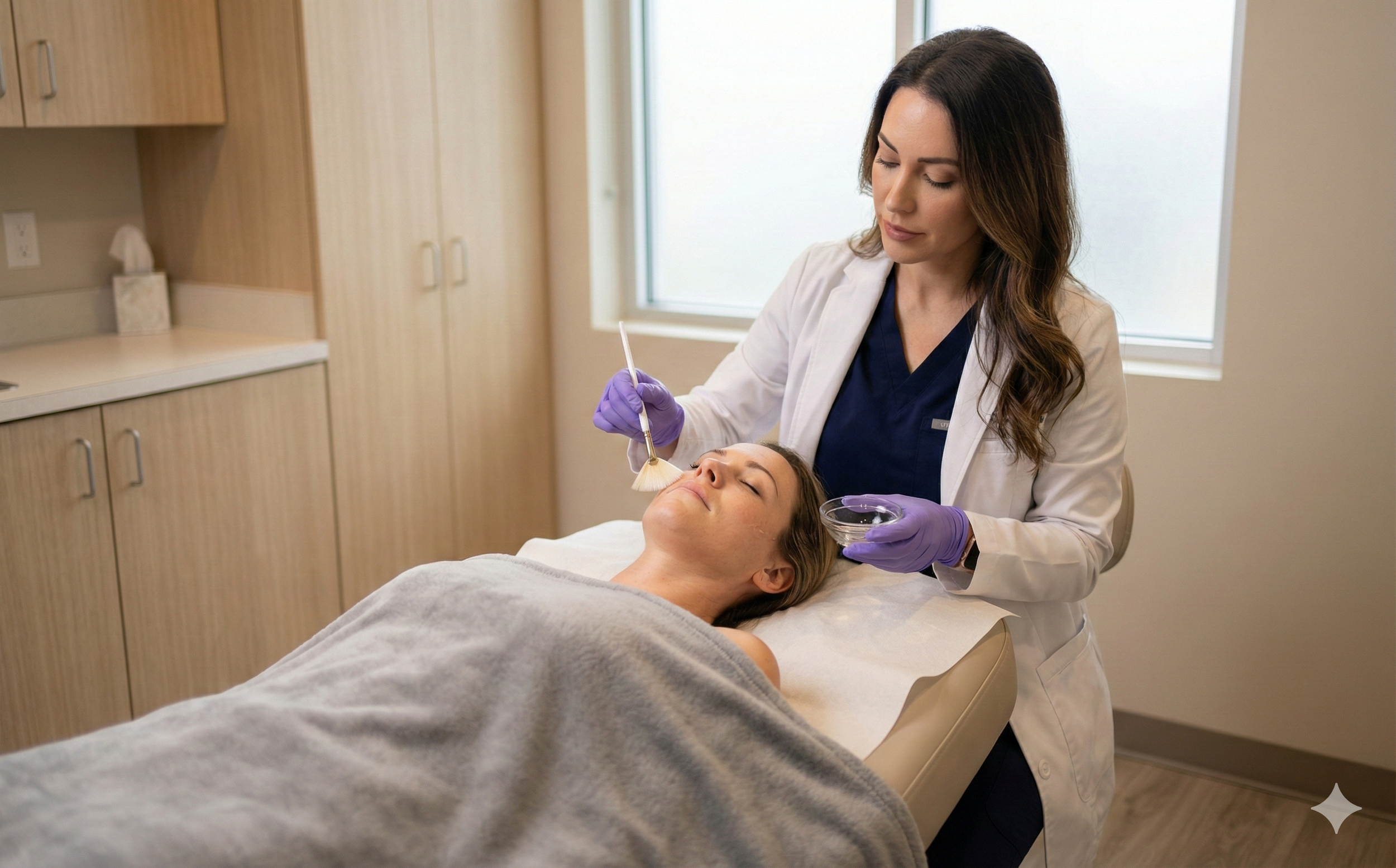
Next, your provider applies the peel solution using a brush, gauze, or applicator in careful, even layers. This is where you'll begin to feel the treatment working. Most patients experience a tingling, warming, or mild stinging sensation as the acid activates on the skin. The intensity of this sensation varies based on the peel depth. Superficial peels typically feel like a mild tingle, while medium-depth peels produce a more noticeable warming or stinging that lasts for a few minutes.
Your provider monitors your skin's response throughout the application, watching for visual cues that indicate the solution has reached the appropriate depth. Timing is precise. The solution is neutralized or removed at exactly the right moment to achieve optimal results without over-treating the skin.
Once the peel is complete, a soothing balm, moisturizer, or post-peel mask is applied to calm the skin and begin the recovery process. Your provider will walk you through everything you need to know about caring for your skin over the coming days.
The entire appointment typically takes 30 to 60 minutes, and for superficial peels, many patients return to work or their normal activities immediately afterward.
Recovery and Aftercare
Recovery from a chemical peel varies significantly depending on the depth of treatment, but knowing what to expect makes the process much easier to navigate.
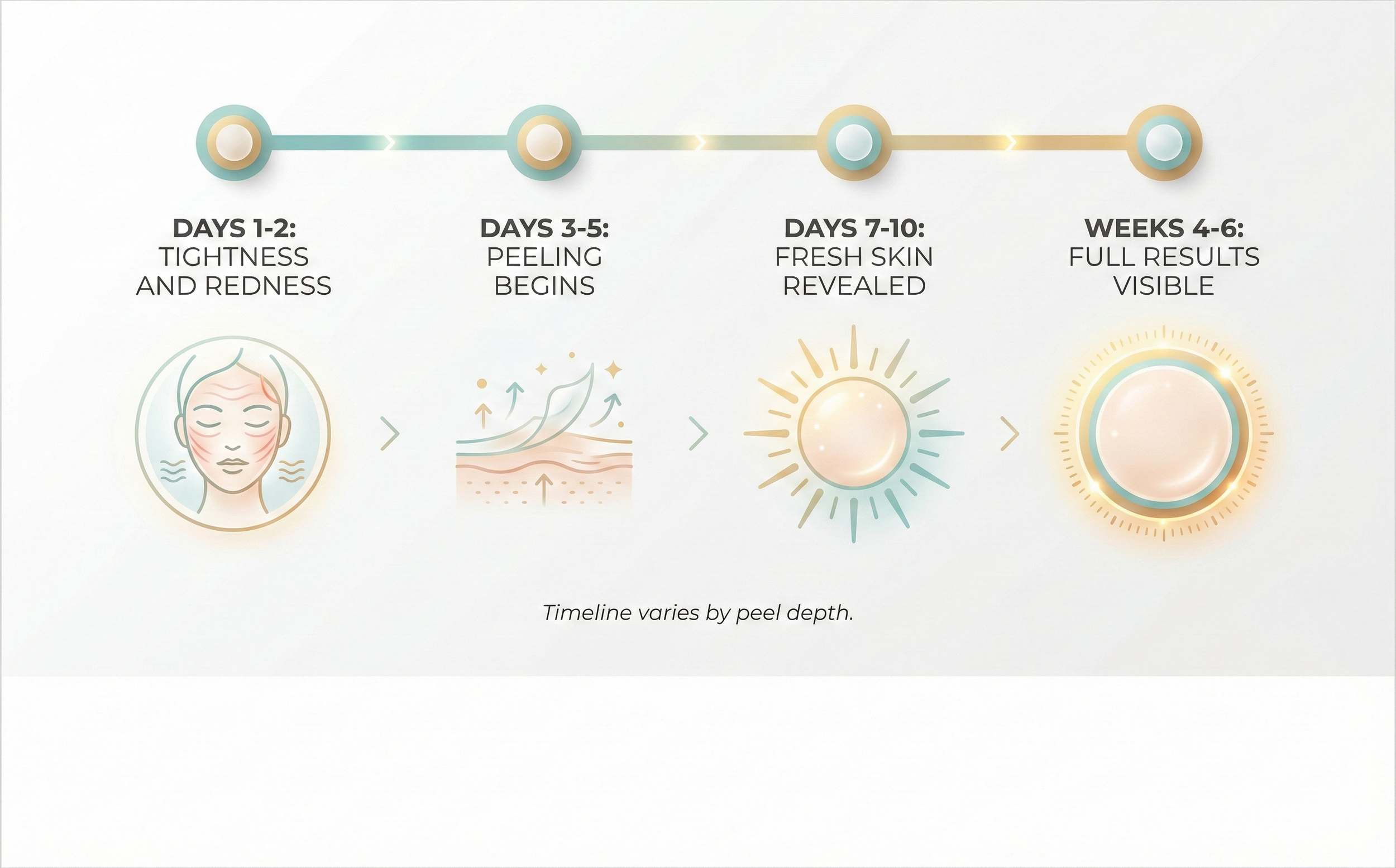
For superficial peels, recovery is minimal. You may experience some mild redness and slight flaking over the next day or two, but most patients find it barely noticeable. Medium-depth peels involve a more visible peeling process that typically begins around day 2 or 3 and continues for up to a week. The skin may feel tight and look visibly flaky or patchy during this phase, but this is a sign the treatment is working exactly as intended. The old, damaged skin is shedding to reveal the fresh, renewed skin beneath it.
Following your provider's aftercare instructions closely during this period is essential. The most important rules are consistent. Avoid direct sun exposure, do not pick or peel flaking skin, skip active ingredients like retinols and exfoliating acids until your provider clears you, and keep your skin hydrated and protected with gentle, approved products. Sunscreen becomes non-negotiable during and after the healing process, as your fresh skin is significantly more vulnerable to UV damage.
Full results from a single peel typically become visible within 4 to 6 weeks as the new skin matures and collagen remodeling continues beneath the surface. For more significant concerns, most providers recommend a series of treatments spaced 4 to 6 weeks apart to build on each session's results and achieve cumulative improvement.
How Much Do Chemical Peels Cost?
Chemical peel pricing varies based on the type of peel, the depth of treatment, and your provider's expertise and location.
Superficial peels generally range from $150 to $300 per session, making them one of the most accessible professional skin treatments available. Medium-depth peels typically fall between $300 and $700 per session, reflecting the increased potency of the formulation and the more significant results they deliver. Deep peels can range from $1,000 to $3,000 or more, though these are performed less frequently in medical spa settings.
When evaluating cost, it's worth considering the cumulative value. A series of superficial or medium-depth peels often delivers transformative results over time at a very reasonable total investment, especially compared to more intensive resurfacing options. Your consultation will provide a personalized treatment plan with clear pricing based on your specific goals and the number of sessions recommended for your skin.
Reveal What's Underneath
Your best skin isn't something you need to create from scratch. It's already there, waiting beneath the surface layers of damage, dullness, and uneven texture that have accumulated over time. A chemical peel simply removes what's standing in the way and gives your skin's natural renewal process the reset it needs to take over.
If you're ready to see what a professional chemical peel can do for your skin, schedule a consultation with our team. We'll evaluate your concerns, recommend the right peel type and depth for your goals, and make sure you feel confident about every step of the process.