How Does Sculptra Work? The Collagen-Stimulating Injectable

When it comes to facial rejuvenation, most people want the same thing — to look refreshed and rested, not "done." That's exactly what collagen-stimulating cosmetic injectables like Sculptra are designed to deliver.
Sculptra is an FDA-approved injectable made from poly-L-lactic acid (PLLA) that works fundamentally differently from traditional fillers. Rather than adding volume directly, it stimulates your body's own collagen production, rebuilding facial structure from within for results that develop gradually and look entirely natural.
It's one of the most exciting aesthetic treatments available today. And one of the most misunderstood.
This guide breaks down how Sculptra actually works at the cellular level, what the treatment experience feels like, how long results take to develop, and what to expect when it comes to cost.
What Is Sculptra? Understanding Collagen-Stimulating Injectables
If you've been researching cosmetic injectables, you've probably come across hyaluronic acid fillers like Juvederm and Restylane. These are excellent treatments, but they work by adding volume directly. Once the filler dissolves, the volume goes with it.
Sculptra takes a completely different approach.
Sculptra is made from poly-L-lactic acid (PLLA), a biocompatible, biodegradable synthetic substance that has been used safely in medical applications, including dissolvable sutures, for decades. It was first FDA-approved in 2004 and has built a long, well-established track record in aesthetic medicine.
Rather than filling lines and wrinkles on contact, Sculptra is classified as a biostimulator. That means its primary job isn't to sit beneath your skin adding volume. Instead, it triggers a biological response that activates your body's own collagen production process. Essentially reminding your skin how to rebuild the structural support it has lost over time.
This distinction matters because the results you see from Sculptra aren't from the product itself. They're from your own newly produced collagen. Once the PLLA microparticles are gradually absorbed by your body, the collagen framework they helped create stays behind.
That's why Sculptra results tend to look so natural. There's no synthetic substance maintaining your volume, it's your own tissue doing the work.
Sculptra is FDA-approved to treat deep facial wrinkles, nasolabial folds, and areas of volume loss that occur as collagen depletes with age. It's particularly effective for restoring midface volume, improving hollow temples, and softening the overall signs of facial aging without creating an overfilled or exaggerated appearance.
For people who value subtlety and longevity over instant gratification, Sculptra is often the ideal choice among injectable options.
How Does Sculptra Work? The Science of Collagen Stimulation
Understanding how Sculptra works helps explain why it delivers such natural-looking results and why patience with the process is so worth it.
When we're young, our skin is rich in collagen, the protein responsible for keeping facial structure firm, smooth, and lifted. Starting in our mid-20s, we begin losing roughly 1% of our collagen each year. Over time, that steady decline leads to hollow cheeks, deeper folds, thinning skin, and an overall loss of facial fullness that makes us look tired or aged.
Sculptra addresses this at the source by restarting your body's own collagen production. Here's what happens at the cellular level once it's injected.
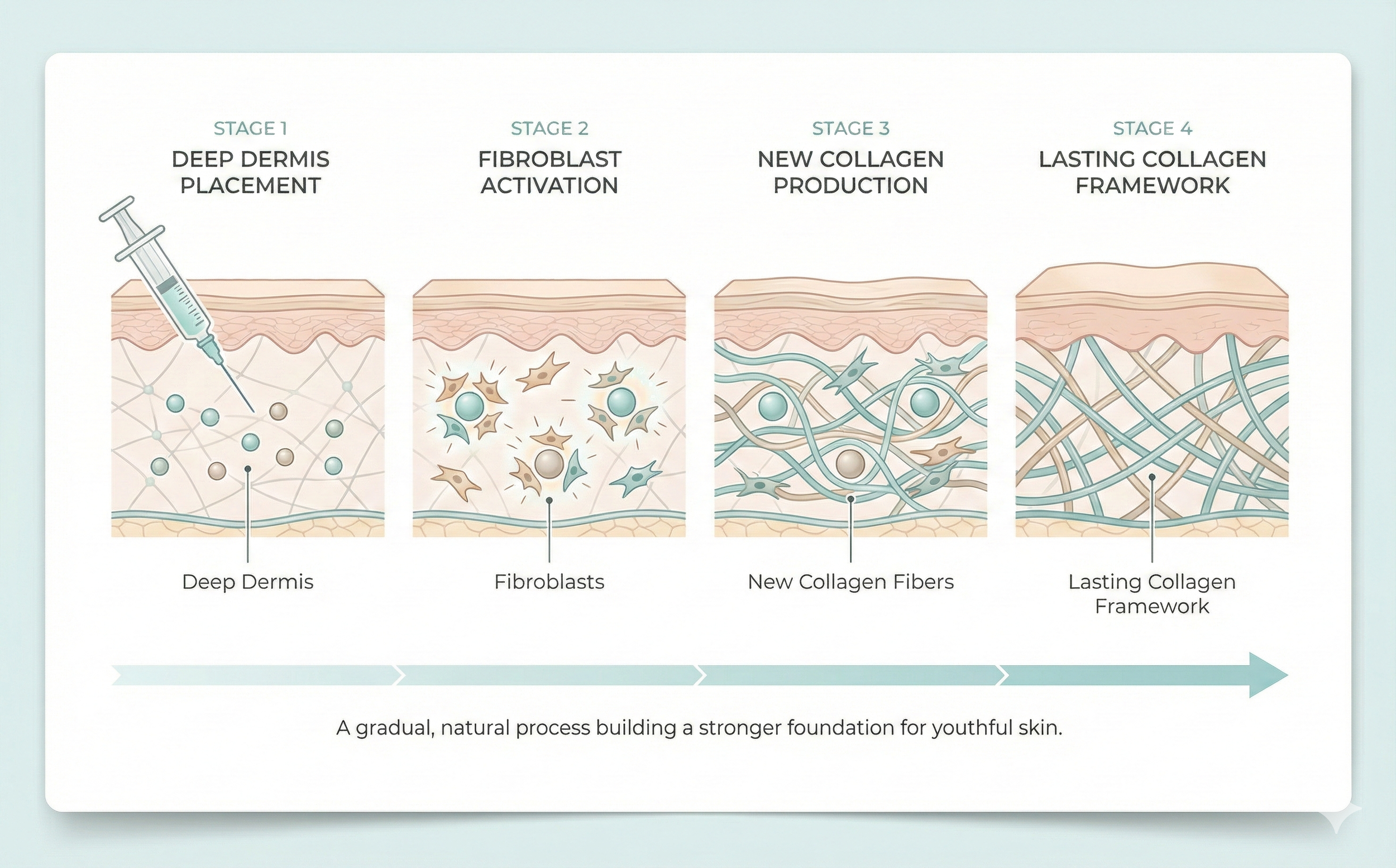
First, the poly-L-lactic acid (PLLA) microparticles are placed strategically into the deep dermis, the layer of skin where collagen naturally lives. These tiny particles create a subtle, controlled inflammatory response, which is your body's natural healing mechanism kicking in.
That response activates cells called fibroblasts. Think of fibroblasts as your skin's construction crew. Their job is to produce collagen, and the presence of PLLA microparticles essentially signals them to get back to work. They begin building new collagen fibers around each microparticle, gradually creating a stronger, more supportive framework beneath the skin's surface.
Over the following weeks and months, something important happens. The PLLA particles are slowly and safely absorbed by your body, just like a dissolvable suture would be. But the new collagen your fibroblasts created? That stays.
What makes this especially valuable is that Sculptra stimulates Type I collagen, the same type of collagen we lose through the natural aging process. So you're not replacing lost volume with a foreign substance. You're actually rebuilding your facial structure with the same biological material your body produced on its own when you were younger.
The gradual nature of this process is the reason Sculptra results look so authentically natural. Nothing changes overnight. Instead, your appearance improves steadily as collagen accumulates, and the people around you simply notice that you look refreshed and well-rested without being able to pinpoint exactly why.
What to Expect During a Sculptra Treatment Session
Knowing what happens during your appointment takes the mystery out of the process and helps you feel confident walking in.
Your session begins with a consultation and facial assessment. Your provider will evaluate your areas of volume loss, discuss your goals, and map out a treatment plan tailored to your specific anatomy. If this is your first visit, this conversation may be more in-depth, but follow-up sessions typically move more quickly.
Once your treatment plan is set, your provider cleanses the skin and may apply a topical numbing cream for added comfort, though Sculptra itself is mixed with lidocaine during reconstitution, so most patients find the injections very tolerable.

The injection process follows a strategic, grid-like pattern across the targeted areas. Your provider places small amounts of Sculptra into the deep dermis at multiple points, ensuring even distribution for smooth, consistent collagen stimulation. The entire process typically takes 30 to 45 minutes depending on how many areas are being treated.
Immediately after your session, you may notice some fullness or subtle swelling in the treated areas. This is from the sterile water used to reconstitute the product, not from the Sculptra itself. That initial volume will subside within a few days, so don't judge your results based on how you look walking out of the office.
Your provider will send you home with one very important instruction: the 5-5-5 massage rule. This means massaging the treated areas 5 times per day, for 5 minutes each time, for 5 days following your appointment. This step is essential for distributing the product evenly and preventing any nodule formation. Your provider's aftercare instructions will walk you through exactly how to perform this massage correctly.
Most patients experience minimal downtime. Some temporary swelling, redness, or tenderness at the injection sites is normal and typically resolves within a day or two. The majority of people return to their regular activities the same day.
How Long Does Sculptra Take to Work? Results Timeline
One of the most common questions people ask is how long does Sculptra take to work. The honest answer is that it takes time, but that timeline is exactly what makes the results so worth it.
Here's a realistic breakdown of what to expect.
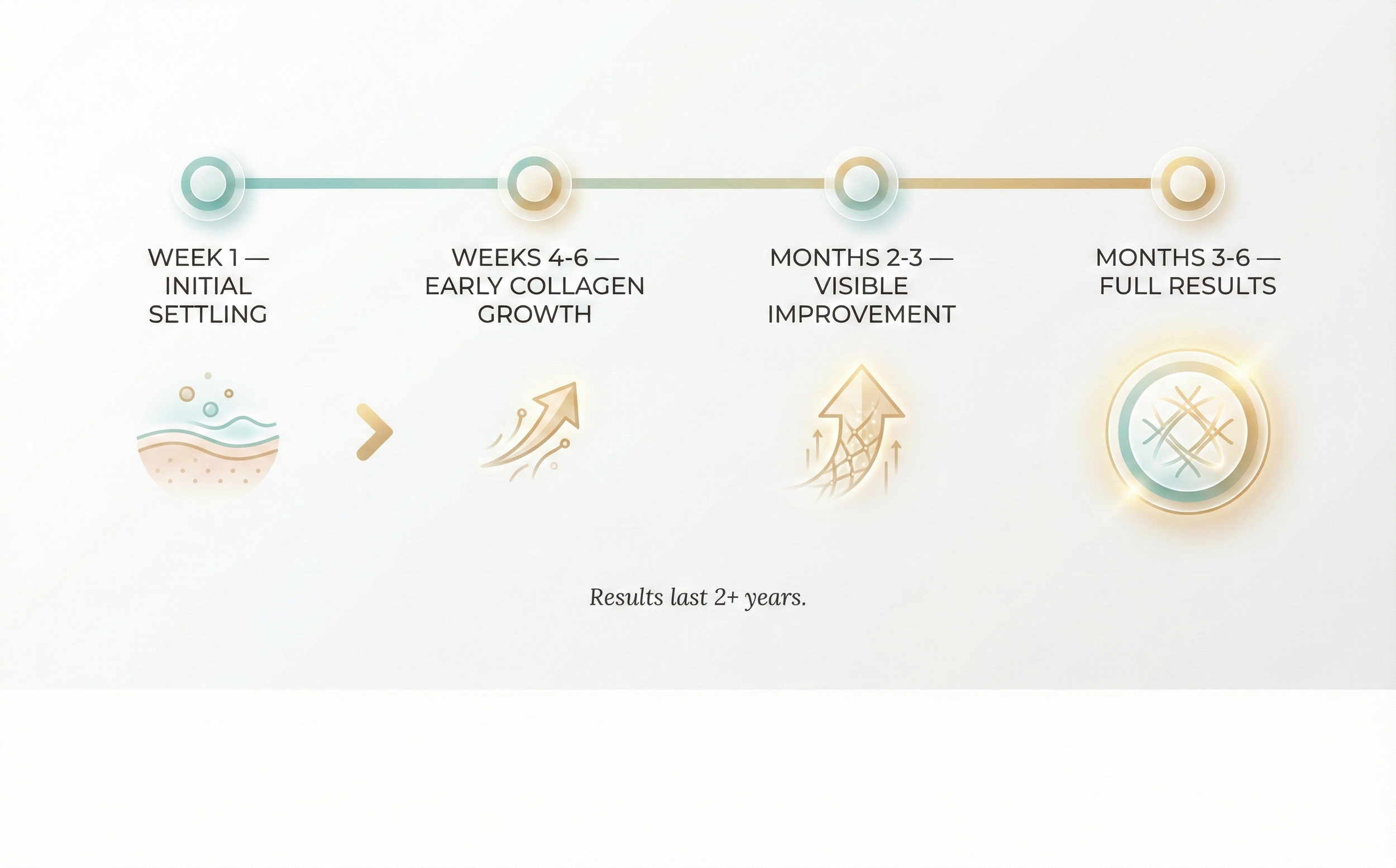
During the first few days after treatment, the initial swelling from reconstitution settles down and your face may look similar to how it did before your appointment. This is completely normal. Some patients call this the "nothing is happening" phase, but beneath the surface, the PLLA microparticles are already beginning to activate your fibroblasts.
Around the 4 to 6 week mark, subtle improvements start to emerge as new collagen begins forming. You may notice your skin looks slightly firmer or that certain shadows and hollows aren't quite as deep. These early changes are encouraging, but they're just the beginning.
By 2 to 3 months, most patients see noticeable improvement. Cheeks appear fuller, folds soften, and the overall quality of the skin begins to shift in a visible way. This is when many people start receiving compliments about looking well-rested or healthy.
Full results typically develop over 3 to 6 months following your complete treatment series. Most patients need [2 to 3 treatment sessions](link: How Many Sculptra Treatments Are Needed?) spaced about 4 to 6 weeks apart for optimal collagen stimulation. The cumulative effect of multiple sessions is what creates truly transformative improvement.
And here's where Sculptra really stands apart from other options. Results can last 2 years or longer, significantly outlasting most hyaluronic acid fillers, which typically require touch-ups every 6 to 12 months. Periodic maintenance sessions can extend your results even further, making Sculptra one of the most lasting investments in facial rejuvenation available today.
The gradual timeline requires patience, but it also provides something invaluable. Your transformation unfolds so naturally that people around you notice you look amazing without ever being able to pinpoint what changed. That kind of subtlety is something instant-result treatments simply cannot replicate.
Sculptra Treatment Areas and Ideal Candidates
Sculptra is remarkably versatile when it comes to addressing age-related volume loss across the face. The most common treatment areas include the temples, where hollowing can create a gaunt or aged appearance, and the cheeks, where midface volume loss is often one of the earliest and most noticeable signs of collagen depletion.
It's also highly effective for softening nasolabial folds, the lines that run from the nose to the corners of the mouth, as well as marionette lines that pull the lower face downward. The chin and jawline are additional areas where Sculptra can restore definition and structure that has gradually faded over time.
While Sculptra is sometimes used off-label for body contouring, particularly the buttocks, its greatest strength lies in facial rejuvenation where subtle, progressive improvement makes the most meaningful difference.
So who is the ideal candidate? Sculptra tends to be the perfect fit for people in their 30s and beyond who are noticing the early or progressing signs of volume loss and want to address them proactively. The best candidates are those who value natural-looking results over dramatic, overnight changes and who have the patience to let the collagen-building process unfold on its own timeline.
Sculptra may not be the best fit for everyone. Those with active skin infections in the treatment areas, certain autoimmune conditions, or a strong preference for immediate visible results may be better suited to alternative aesthetic treatments. A consultation with your provider is always the best way to determine whether Sculptra aligns with your goals and your unique facial anatomy.
How Much Does Sculptra Cost? Understanding Your Investment
A common question when considering Sculptra is what the treatment actually costs. Transparency matters, so here's a realistic picture of what your investment looks like
Sculptra is typically priced per vial, with costs generally ranging from $750 to $1,200 or more depending on your geographic location, your provider's level of expertise, and the complexity of your treatment plan. Most patients need 2 to 4 vials per session and 2 to 3 sessions total, so the overall investment adds up across the full treatment series.
That may sound like a significant commitment compared to a single syringe of hyaluronic acid filler. But when you factor in longevity, the math shifts considerably. While most fillers require touch-ups every 6 to 12 months, Sculptra results last 2 years or longer. Spread across that timeline, many patients find that Sculptra is actually the more cost-effective option.
A consultation with your provider will give you a personalized treatment plan and clear cost estimate based on your specific goals and the number of vials recommended for your anatomy.
Rediscover Your Natural Contours
Sculptra works with your body's own biology to do something no traditional filler can. It rebuilds the collagen foundation that time has gradually taken away, delivering results that look like a refreshed, revitalized version of you rather than an altered one.
The process requires patience, but that patience is rewarded with results that are subtle, natural, and remarkably long-lasting.
If you're ready to explore whether Sculptra is the right fit for your goals, schedule a consultation with our team. We'll evaluate your areas of concern, build a personalized treatment plan, and walk you through every step of the process so you feel completely confident moving forward.