Dermal Fillers: The Complete Guide to Facial Balancing and Contouring

Our faces naturally change over time. We lose fat, collagen, and even bone density as we age, which leads to hollowing, sagging, and lines that weren't there before. These changes can affect how we look in the mirror and how we feel about our appearance.
Dermal fillers have become one of the most popular medical spa treatments for addressing these concerns without surgery. They offer a way to restore lost volume, enhance features, and create better overall facial harmony, all with minimal downtime and immediate results.
So what are dermal fillers? In simple terms, they're injectable gels that add volume beneath the skin's surface, smooth lines, and enhance facial contours. They can subtly refresh your appearance or make more noticeable changes depending on your goals.
This guide covers how dermal fillers work, the different types available, popular treatment areas, and how they're used for facial balancing and facial contouring. Whether you're exploring fillers for the first time or looking to learn more, you'll find the information you need here.
What Are Dermal Fillers and How Do They Work?
Dermal fillers are injectable gels that add volume beneath the skin's surface. Most are made from hyaluronic acid (HA), a substance naturally found in your body that attracts and holds moisture. This makes them biocompatible, safe, and effective for restoring what time takes away.
Understanding what are dermal fillers requires understanding what happens to our faces as we age. Over the years, we lose fat pads that give our faces youthful fullness. Collagen production slows down. We even lose bone density in our facial structure. The result is hollow areas, sagging skin, and wrinkles that develop as underlying support diminishes.
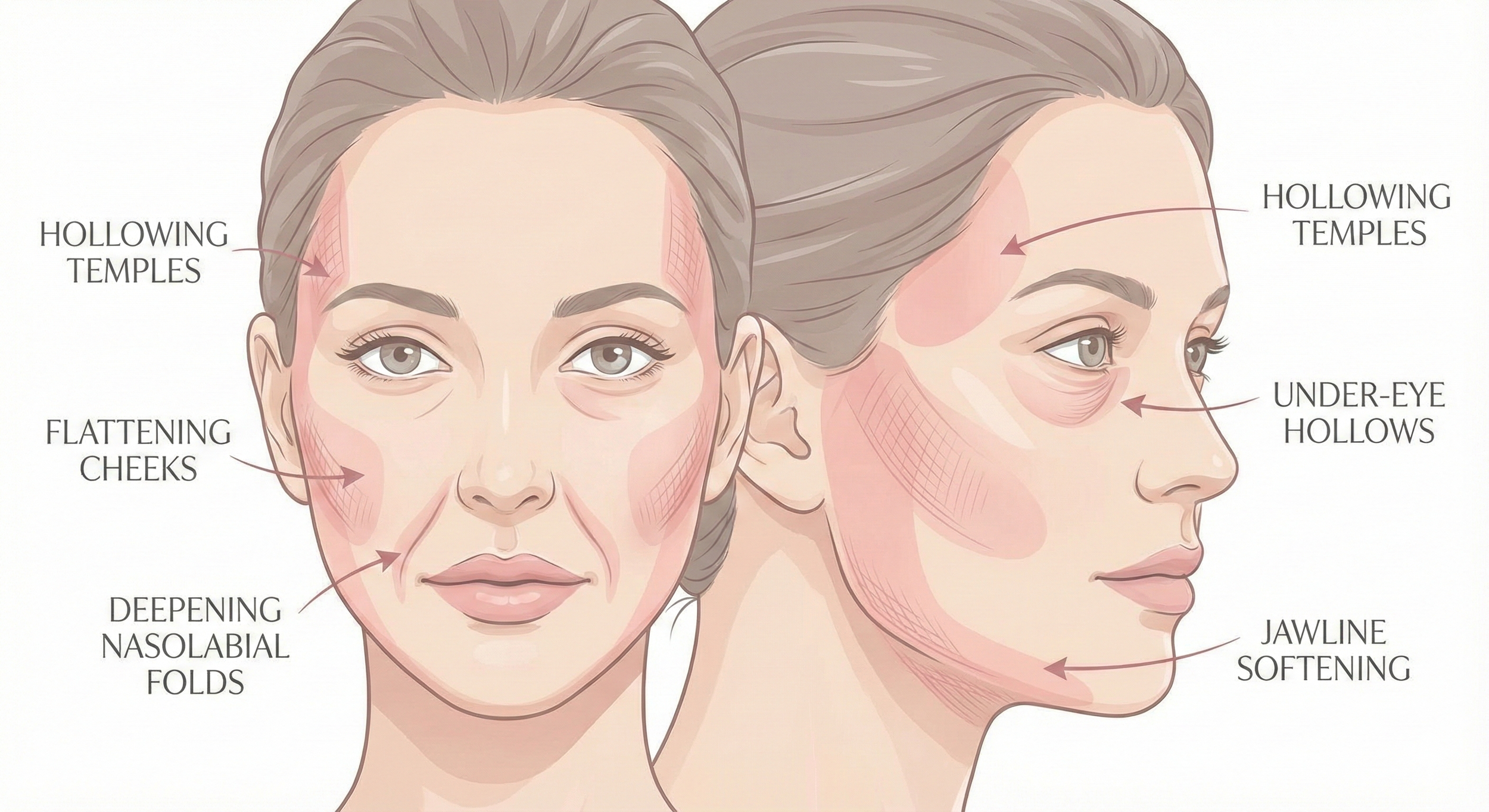
Fillers address these changes by physically replacing lost volume. They support facial structures, smooth lines, and restore fullness to areas that have depleted over time. Think of them as scaffolding that props up and fills in what's been lost.
Unlike neuromodulators like Botox that take days to show results, fillers work immediately. You'll see the difference as soon as treatment is complete, though final results settle over 1-2 weeks as any swelling subsides. Learn more about how dermal fillers differ from Botox and when each treatment makes sense.
Fillers are temporary by design. They gradually break down naturally in your body over months to years, depending on the specific product used and where it's placed.
Types of Dermal Fillers
Not all dermal fillers are the same. Different formulations are designed for different purposes, from adding subtle volume to creating structural support. Understanding your options helps you have a more informed conversation with your provider.
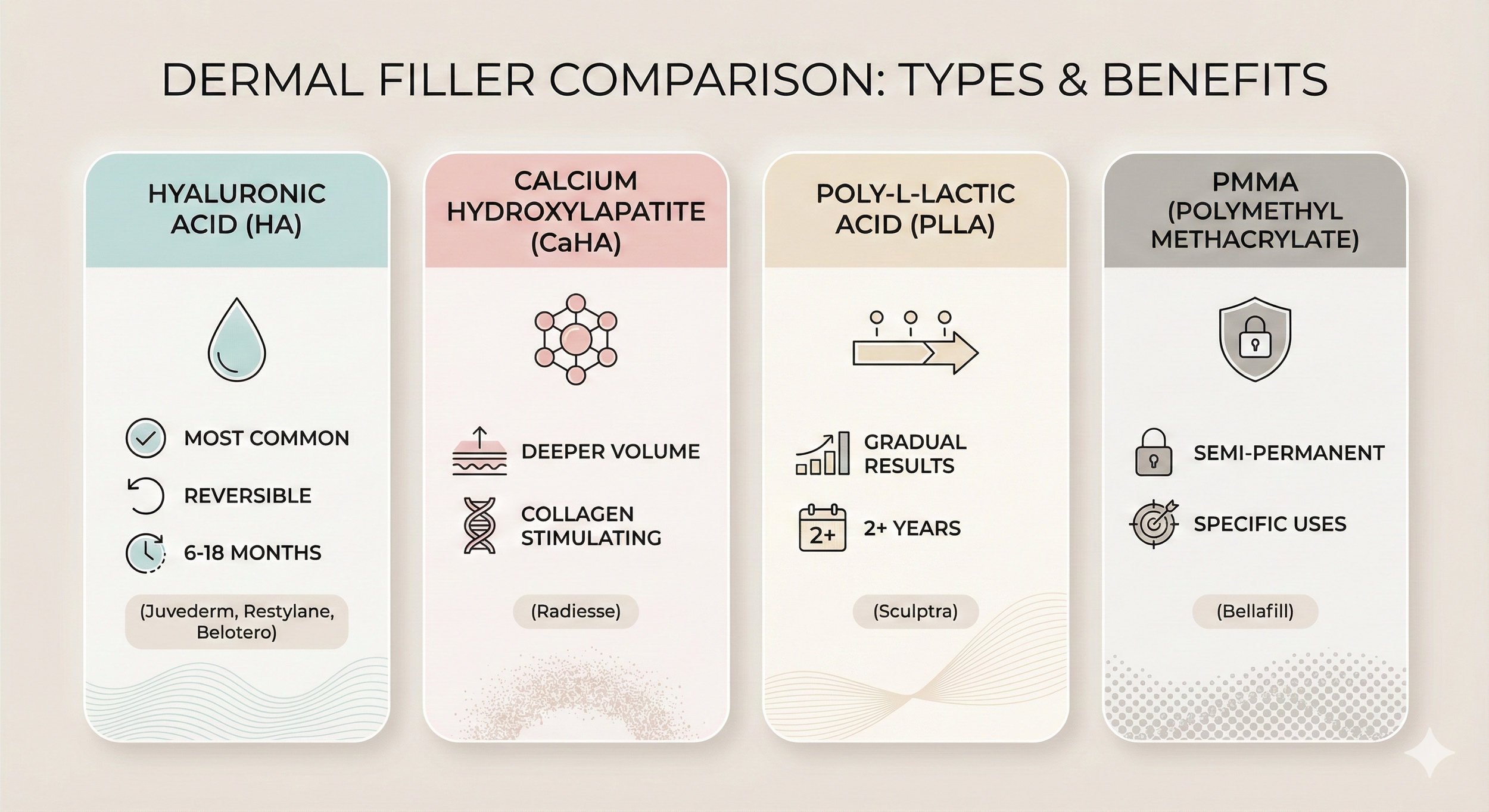
Hyaluronic Acid (HA) Fillers The most common type, including the Juvederm and Restylane families. HA is a naturally occurring substance in your body, making these fillers well-tolerated. They're versatile, working well in many areas from lips to cheeks to under eyes. A major advantage is that they can be dissolved if needed.
Calcium Hydroxylapatite (Radiesse) A thicker filler with a gel consistency that works well for deeper volume loss. It also stimulates your body's own collagen production over time, providing benefits beyond the filler itself.
Poly-L-Lactic Acid (Sculptra) A collagen stimulator rather than a traditional filler. It works gradually over several sessions, with results that can last two years or more.
PMMA (Bellafill) A semi-permanent option used for certain applications like acne scars and deeper facial folds.
HA fillers remain the most popular choice due to their versatility, natural results, and reversibility. Your provider will recommend the best type based on your goals and treatment areas. Explore our dermal filler options to learn more.
Treatment Approaches: Facial Contouring vs. Facial Balancing
Dermal fillers can do more than just fill in a wrinkle or add volume to one spot. How they're used matters as much as where they're placed. Two treatment philosophies have become central to achieving natural, harmonious results: facial balancing and facial contouring.
Understanding these approaches helps you think beyond individual concerns and consider what you're really trying to achieve. Are you looking to restore what time has taken away? Enhance features you've always wished were more defined? Create better overall proportion between your features?
Your goals will shape which approach makes the most sense for you. Some people benefit from one, others from a combination of both. Here's what each involves.
What Is Facial Balancing?
Facial balancing is a treatment approach that looks at the face as a whole rather than focusing on isolated areas. Instead of simply filling a line here or adding volume there, the goal is creating harmony and proportion between all your features.
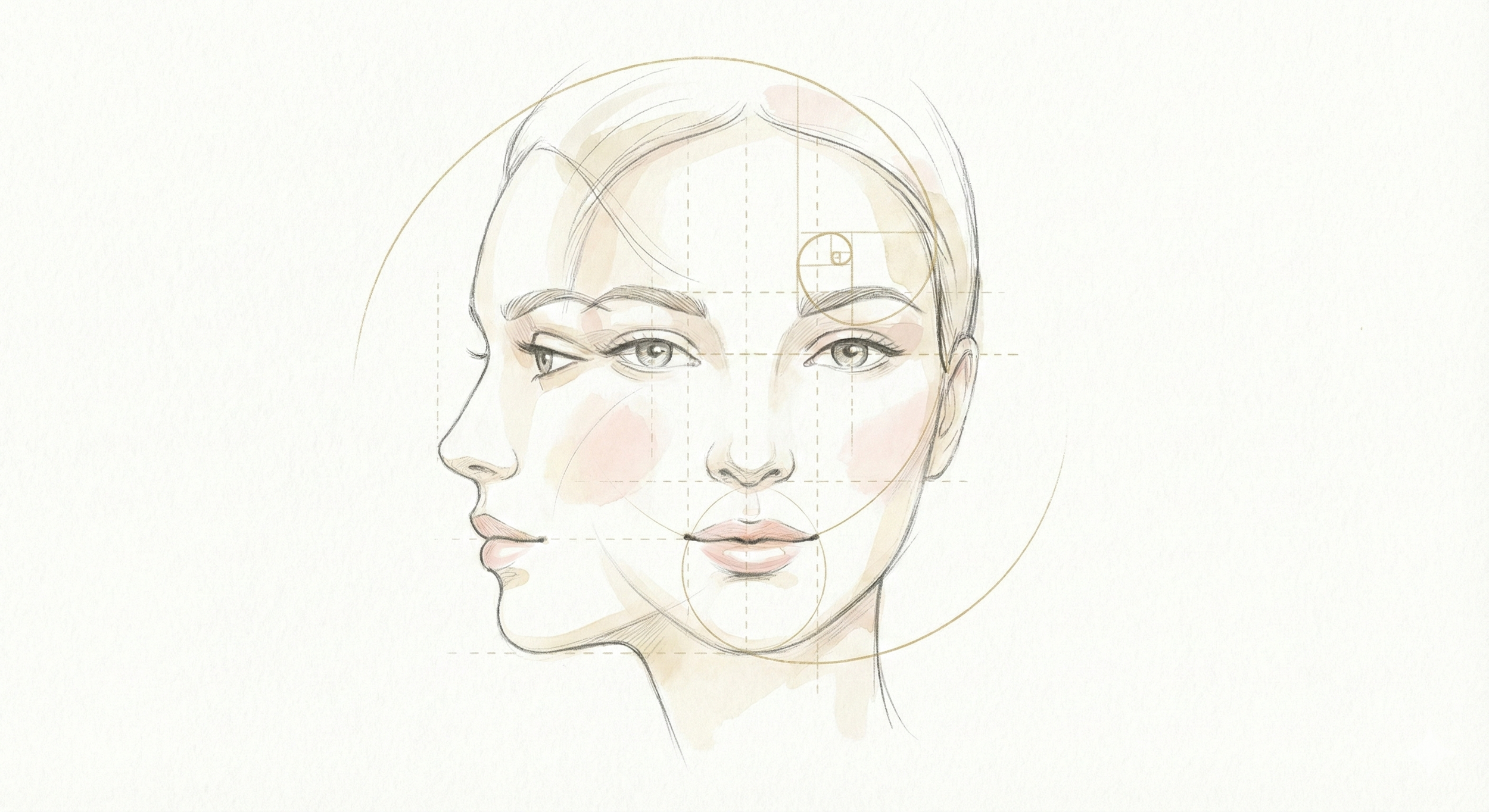
So what is facial balancing really about? It comes down to how we perceive faces. Our sense of attractiveness is largely tied to symmetry and proportion. When features are in balance with each other, the face looks more harmonious and pleasing, even if we can't pinpoint exactly why.
This approach uses dermal fillers strategically to bring features into better alignment. That might mean building up a recessed chin to balance a prominent nose, adding cheek volume to lift the midface and reduce the appearance of nasolabial folds, or enhancing the jawline to create better lower face proportion.
The result is often more natural-looking than treating areas in isolation. When the whole face is considered together, enhancements look like a refreshed version of you rather than obvious "work." People notice you look great without being able to identify what changed.
Facial balancing isn't about changing who you are. It's about optimizing what you already have and bringing out your best features.
What Is Facial Contouring?
Facial contouring uses dermal fillers to enhance, define, or reshape facial structures. While facial balancing focuses on overall proportion and harmony, facial contouring is specifically about creating or enhancing features like cheekbones, jawline, or chin.
So what is facial contouring in practice? Think of it like makeup contouring, but with longer-lasting, three-dimensional results. Strategic filler placement can create the appearance of higher cheekbones, a more defined jaw, or a stronger chin projection, all without surgery. The filler adds structure and definition where you want it, sculpting the face in ways that makeup can only temporarily mimic.
Facial contouring can be as subtle or dramatic as you want. Some people want a slight enhancement to their existing bone structure. Others are looking for more noticeable definition and angularity.
Contouring and balancing often go hand in hand. Enhancing your cheekbones, for example, might be a contouring goal you've always wanted while also serving as part of an overall balancing strategy that improves midface proportion and creates lift. Your provider can help you understand how these approaches work together for your specific face.
Popular Treatment Areas
Dermal fillers can be used across many areas of the face, each with different goals and techniques. The most popular treatment areas include:
Lips: volume, shape, symmetry
Cheeks: volume restoration, lift, contour
Under eyes/tear troughs: hollowness, dark circles
Nasolabial folds: lines from nose to mouth
Marionette lines: lines from mouth to chin
Chin: projection, definition, balancing
Jawline: definition, contour, jowl improvement
Temples: hollow correction
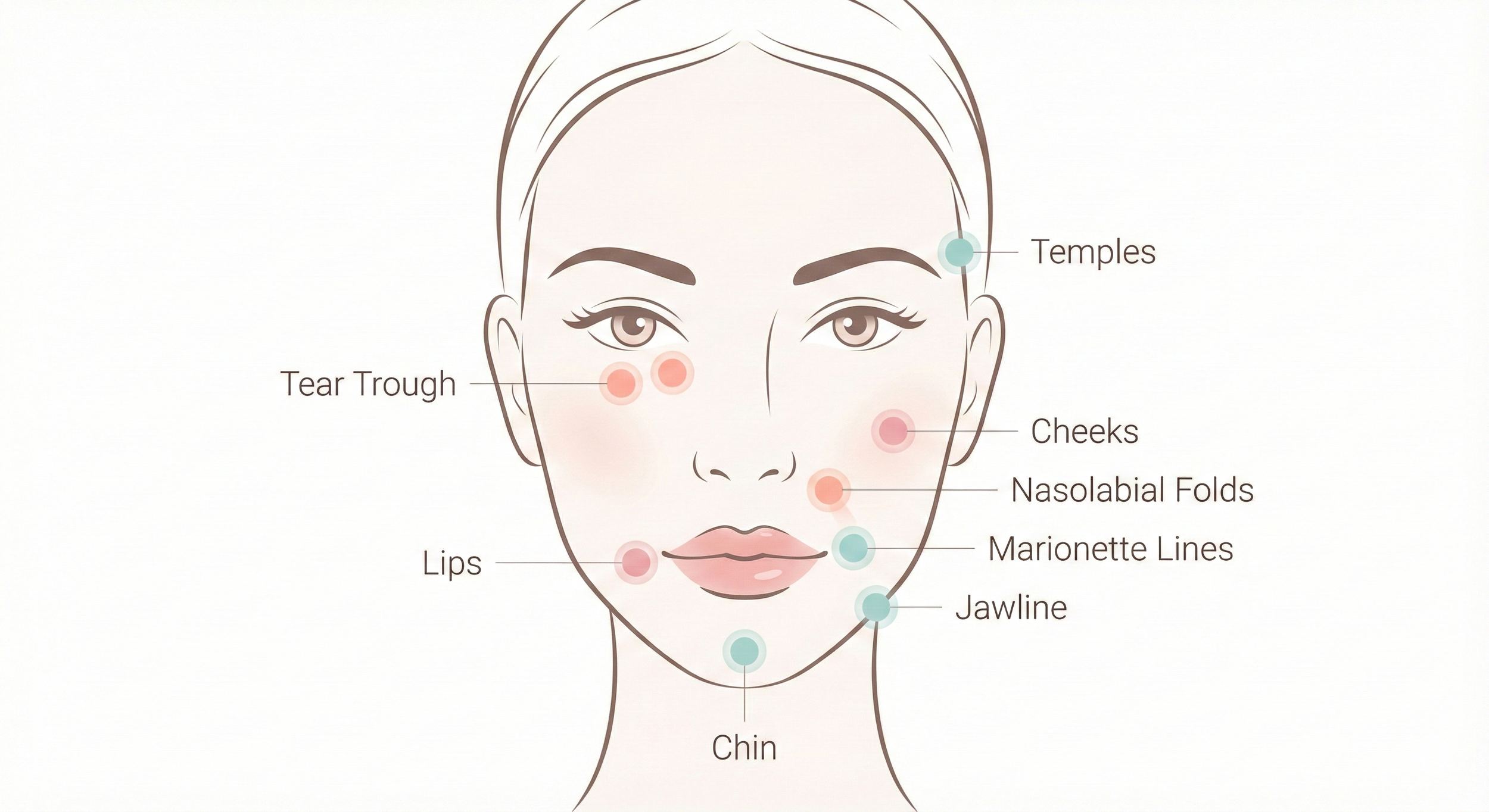
Treatment areas are often combined in a single session for comprehensive facial balancing or contouring results. Addressing multiple areas together creates a more cohesive outcome than treating one spot in isolation.
Here's a closer look at a few key areas.
Lip Filler
Lips are one of the most popular filler treatment areas. Lip filler can add volume, enhance shape, improve symmetry, define the lip border, and smooth vertical lip lines that develop over time.
Results can range from subtle enhancement to more noticeable volume, depending on your goals. A skilled provider will work with your natural lip shape to create results that complement your face rather than overwhelm it. Check out our complete lip filler guide for more details.
Cheek Filler
Cheek filler restores volume lost with age and can enhance cheekbone definition for a more contoured look. Adding volume to the midface also creates a subtle lifting effect that can improve the appearance of nasolabial folds and overall facial sagging.
Cheek treatment is often a cornerstone of facial balancing because the midface affects how the entire face looks. When cheeks are full and lifted, everything below them benefits. Learn more about cheek filler and what it can achieve.
Under Eye Filler
Under eye filler, also called tear trough treatment, addresses hollowness beneath the eyes that creates shadows and a tired appearance. By filling this area, dark circles caused by volume loss can be significantly improved.
This is a delicate area requiring an experienced provider. Results can be transformative for the right candidates, making them look more rested and refreshed without anyone knowing why. Explore our guide on under eye filler to see if you're a candidate.
Chin and Jawline
Chin and jawline filler can create definition, improve profile balance, and address jowls or a weak chin. These areas are key players in both facial contouring and balancing.
Chin augmentation can dramatically improve facial harmony, especially when a recessed chin throws off the balance between the nose and lower face. Jawline filler creates a more defined, sculpted appearance. Both treatments are popular with men and women looking for better lower face structure.
What to Expect During Treatment
Knowing what happens during a dermal fillers appointment can ease any nerves you might have. The process is straightforward and quicker than most people expect.
Before: Your appointment starts with a consultation to discuss your goals and create a treatment plan. Once you're ready to proceed, your provider cleanses the skin and may apply a topical numbing cream for added comfort, though most fillers already contain lidocaine to minimize discomfort during injection.
During: Treatment typically takes 1 hour depending on how many areas are being addressed. Filler is injected using a fine needle or a blunt-tipped cannula, depending on the technique and area. Most people feel pressure and mild pinching but find the experience tolerable.
After: Results are visible immediately, though some swelling is normal in the first few days. You can return to most activities right away. Temporary redness, swelling, or bruising at injection sites is common and resolves on its own. Learn more about what to expect with swelling and when it should subside.
Every treatment is customized. Your provider will determine the right products, placement, and amounts based on your unique anatomy and goals.
Results and Recovery
One of the biggest advantages of dermal fillers is that you see results immediately. Unlike treatments that take days or weeks to show effects, you'll notice a difference as soon as your appointment is finished.
Immediate Results: Keep in mind that some swelling is normal and can make things look slightly overdone at first. Don't panic. This is temporary and not a reflection of your final outcome.
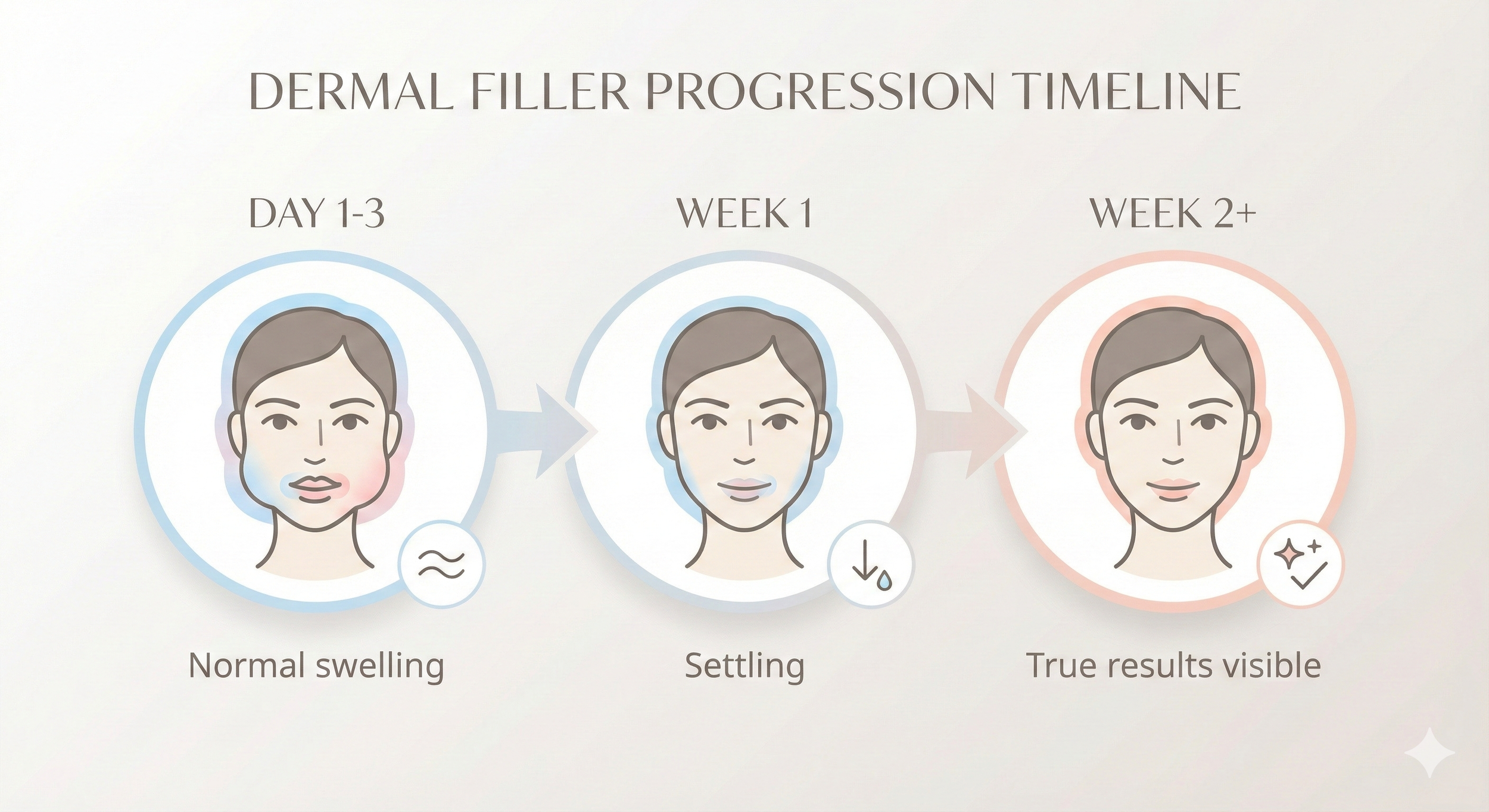
Settling Period: Over 1-2 weeks, swelling subsides and the filler settles into its final position. This is when you'll see your true results. Most providers recommend waiting until this point before assessing whether any touch-ups are needed.
Duration: How long fillers last depends on the product and placement. HA fillers typically last 6-18 months. Lips metabolize filler faster, usually 6-12 months, while cheeks often last 12-18 months. Stimulatory fillers like Sculptra can last 2+ years. Read our filler duration guide for a detailed breakdown.
Maintenance: To maintain results, plan for touch-up treatments before filler fully dissolves. Many people find they need less product over time with consistent maintenance.
Aftercare Tips
Proper aftercare helps optimize your results and minimize downtime. Follow these guidelines for the best outcome:
Avoid touching or pressing on treated areas for 24-48 hours
Skip intense exercise for 24-48 hours
Avoid alcohol for 24 hours, as it increases bruising risk
Hold off on facials, saunas, or excessive heat for 48 hours
Sleep slightly elevated the first night to minimize swelling
Use ice or cold compresses to help reduce swelling
Some swelling and possible bruising is completely normal and temporary. Most side effects resolve within a few days to a week. Following these simple guidelines helps ensure the filler stays in place and your recovery goes smoothly.
For more detailed guidance, check out our complete aftercare guide covering everything you should do and avoid after your appointment.
Taking the Next Step
Dermal fillers offer a safe, effective, and non-surgical way to restore volume, enhance features, and create better facial harmony. Whether your goals involve facial balancing for overall proportion or facial contouring for more defined structure, fillers provide flexible options with immediate results.
Maybe you're focused on a specific concern like thin lips, hollow cheeks, or under eye shadows. Or perhaps you want a comprehensive approach that refreshes your entire appearance. Either way, fillers can be tailored to what you want to achieve.
Aging changes our faces, but you have options to look and feel your best at any age. The right treatment plan starts with understanding your unique anatomy and goals. A consultation can help you explore what's possible and create a personalized approach that works for you.